Country Risk Data

Country
Risk Data
Structured country and sub-national risk scores across environmental, social, political and economic factors — helping organisations make more informed, confident decisions across operations, supply chains and investments
Request a demo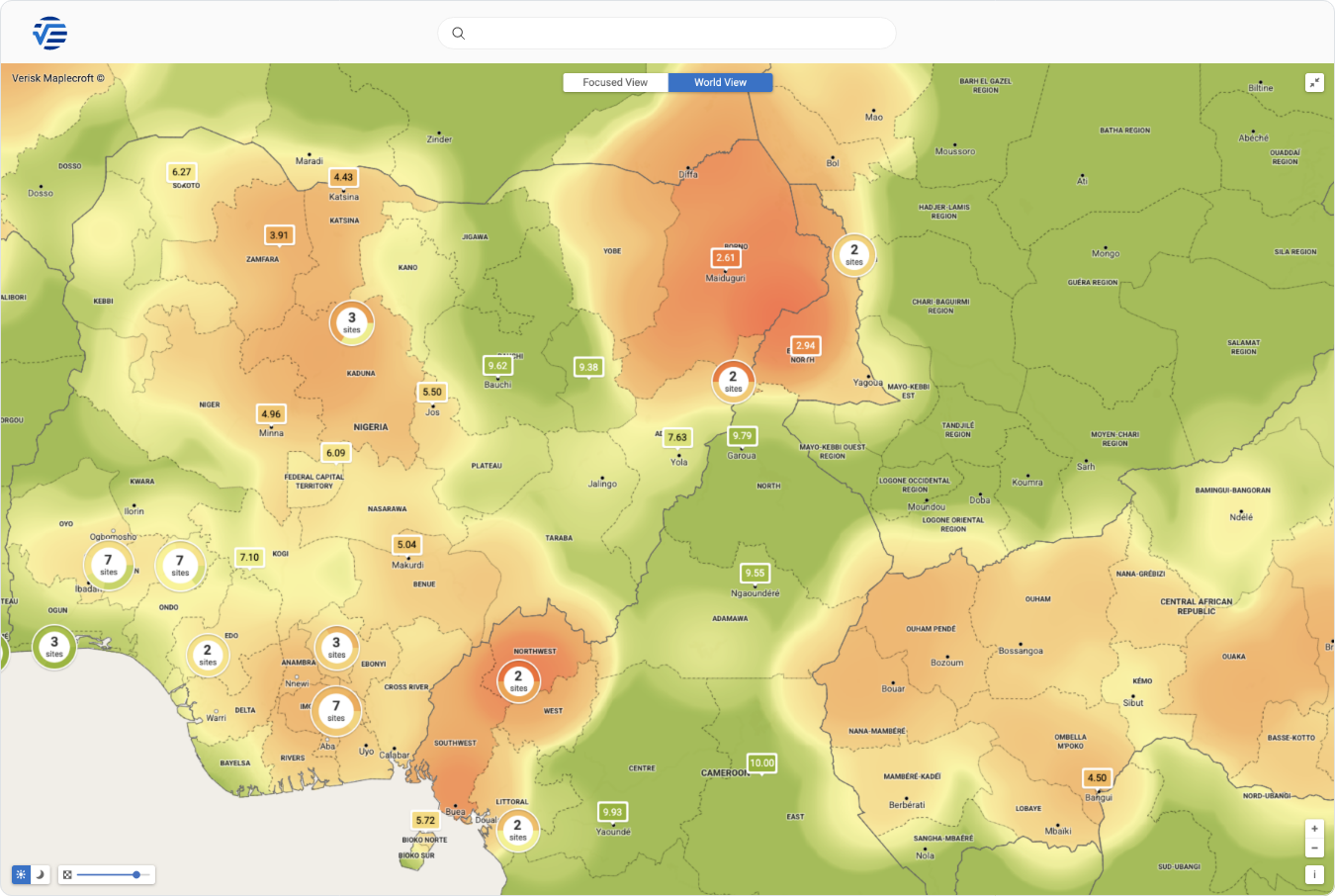
Global conditions are becoming more volatile and interconnected, affecting supply chains, investments and operations in ways that are harder to predict. Yet many organisations still rely on fragmented sources and static views of external risk. The challenge isn’t access to information — it’s that structured, comparable insight isn’t embedded in how teams plan, invest or operate. Without a shared, data-driven view:
- Decisions across procurement, sustainability and risk teams remain inconsistent and slow
- Emerging disruptions go unnoticed until they impact assets or supply chains
- Country-level averages mask critical sub-national hotspots
- Siloed tools and manual methods make risks difficult to compare and act on
Organisations need a connected view of country risk that can be embedded into day-to-day decisions — a common picture of the world teams can act on together.
A connected view of risk
Turn fragmented country insights into a single, structured view of risk across your business
Country Risk Data translates complex environmental, social, political and economic risks into clear, comparable scores, so teams share a consistent view of country and sub‑national risk across supply chains, operations, investments and assets. It also shows what drives each score, with full transparency into the underlying indicators and methodology.
- Coverage across 198 countries, sub-national for selected risk indices
- Climate, environmental, political, economic, governance, and human rights themes
- Transparent, documented methodology and standardised scores
- Maintained by specialist analysts monitoring global risk developments
- Delivery via platform, APIs or partner platforms for easy integration
Consistently identify material political, social, environmental and economic risks across countries, regions, suppliers and assets — using standardised, comparable scores.
Drill into location-level scorecards to understand what is driving risk — including key indicators, historical trends, forward-looking signals and expert qualitative context.
Track how country risk evolves over time, detect early warning signals and distinguish short-term noise from meaningful deterioration or improvement.
Integrate country risk insights into decision-making — from market entry and sourcing strategies to capital allocation, portfolio construction and operational resilience.
Who is it for?
Enterprise Risk & Operational Resilience
Track emerging country risks that could disrupt operations, supply chains, or investments.
ESG, Climate Risk & Human Rights
Measure environmental and social risks across operations and supply chains to support reporting and strategy.
Responsible Sourcing & Supply Chain Risk
Identify higher-risk sourcing locations and prioritise supplier due diligence.
Corporate Security & Crisis Management
Monitor political violence, civil unrest, and security conditions affecting operational sites.
Portfolio Managers & Sovereign Risk Analysts
Factor political, ESG, and climate country risks into investment analysis and portfolio decisions.
Compliance & Third-Party Risk
Support risk-based due diligence and third-party screening with structured country risk data.
Why teams choose our Data
- Complete coverage
- Comparable & configurable
- Transparent & auditable
- Delivery & access
Complete coverage
Global coverage
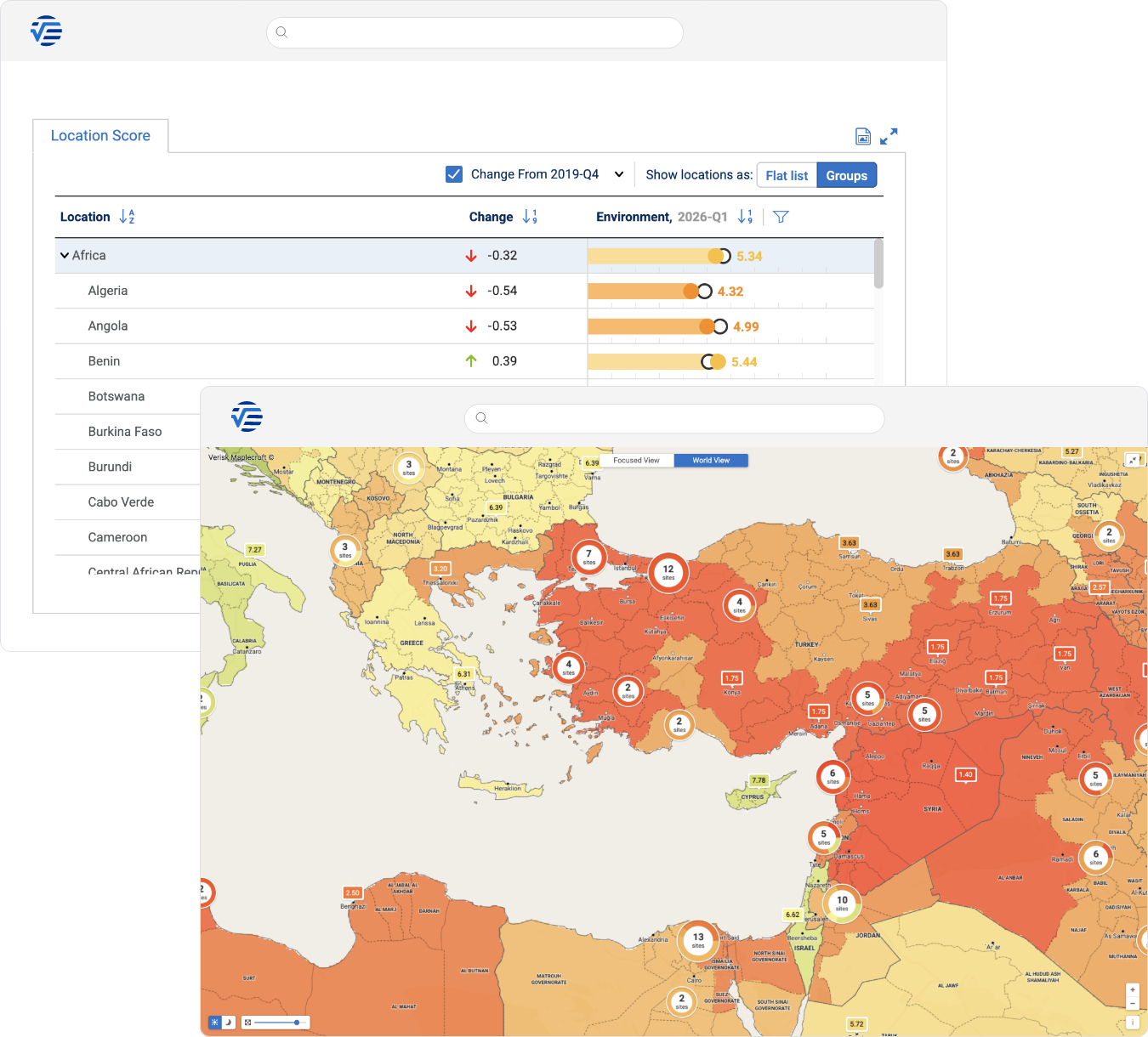
Country risk data for 198 countries, plus sub‑national detail in key and high‑risk markets.
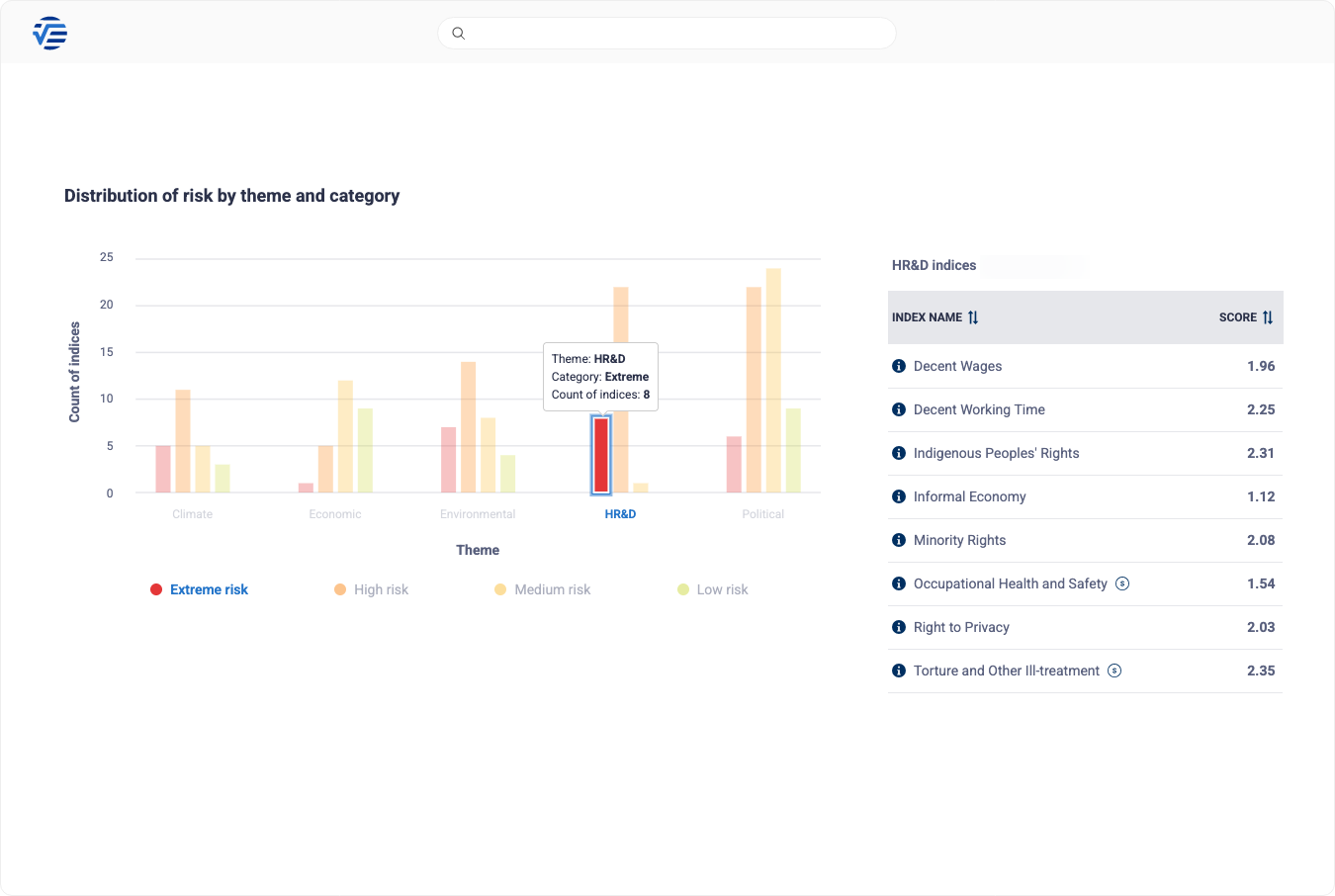
Comprehensive risk coverage
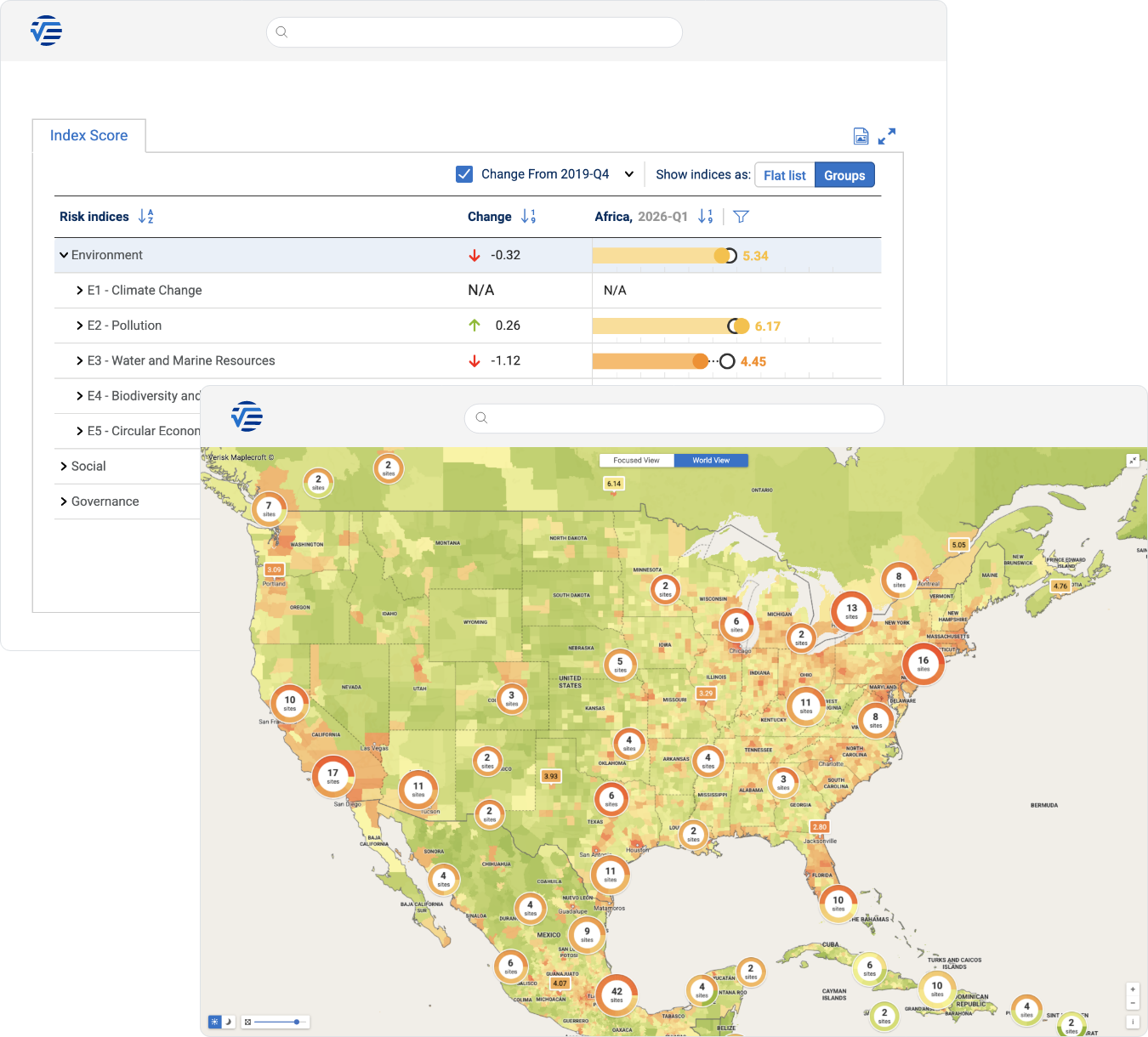
A single framework covering climate, environmental, political, social, economic and human rights risks for each location.
Historical & trend analytics
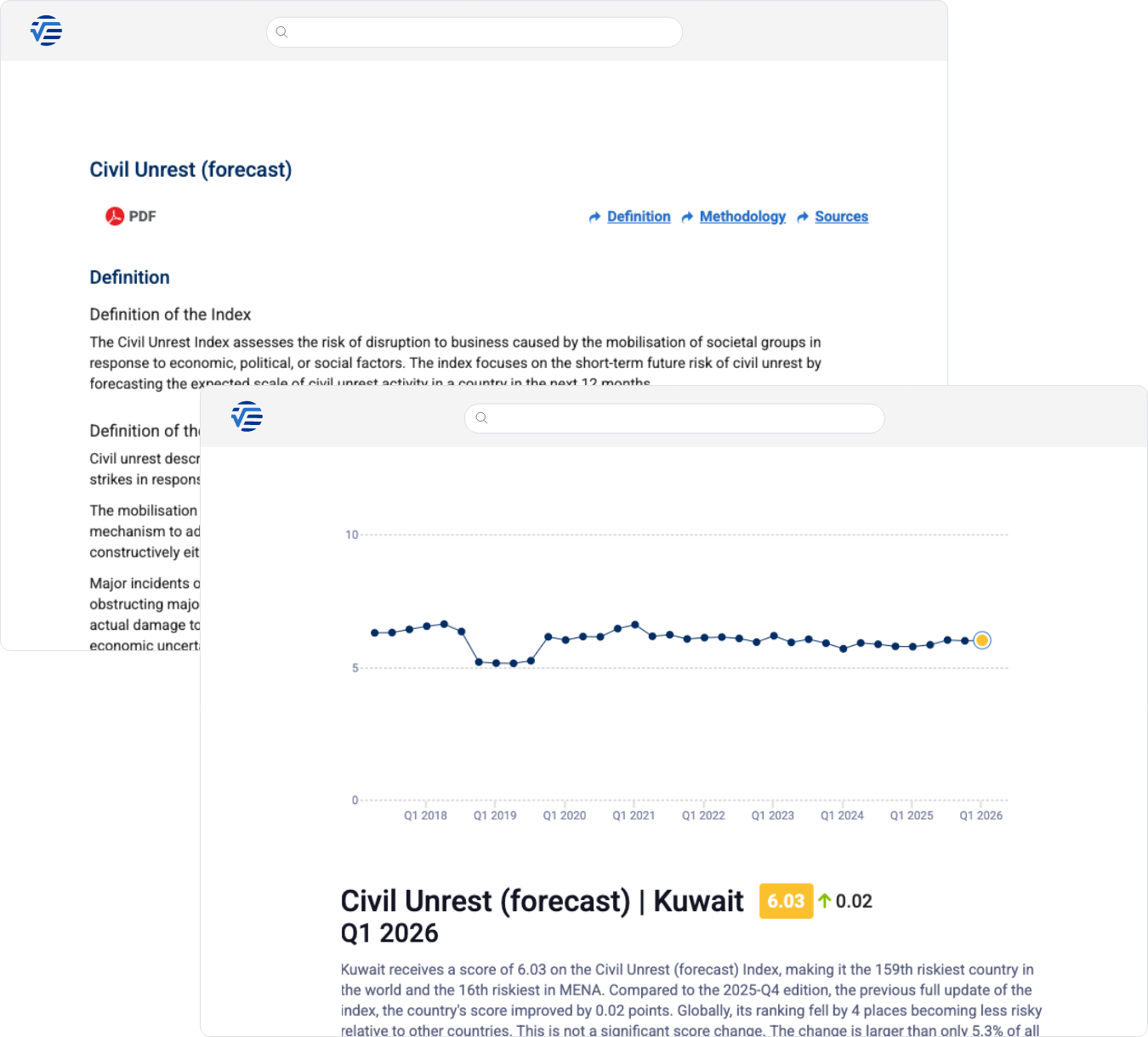
Time series and trend indicators show whether country and regional risk is improving or deteriorating.
Comparable & configurable
Consistent risk scoring
Standardised country risk scores enable like‑for‑like comparison across countries, regions, sectors, and assets.
Workflow‑ready datasets
Configurable datasets support investment, supply chain, underwriting, and compliance workflows.
Easy integration
Structured country risk data is built to plug into internal models, dashboards, and risk systems.
Transparent & auditable
Documented methodology
Clear explanations for how each country risk index and indicator is built, including data sources and assumptions.
Depth & breadth of data
Extensive ESG and political risk indicators combining structured, unstructured and location-specific data to provide a comprehensive view of country risk.
Expert-led risk updates
A global team of quantitative and qualitative specialists reviews our data and methodology to ensure accurate, high-quality country risk insight you can rely on.
Delivery & access
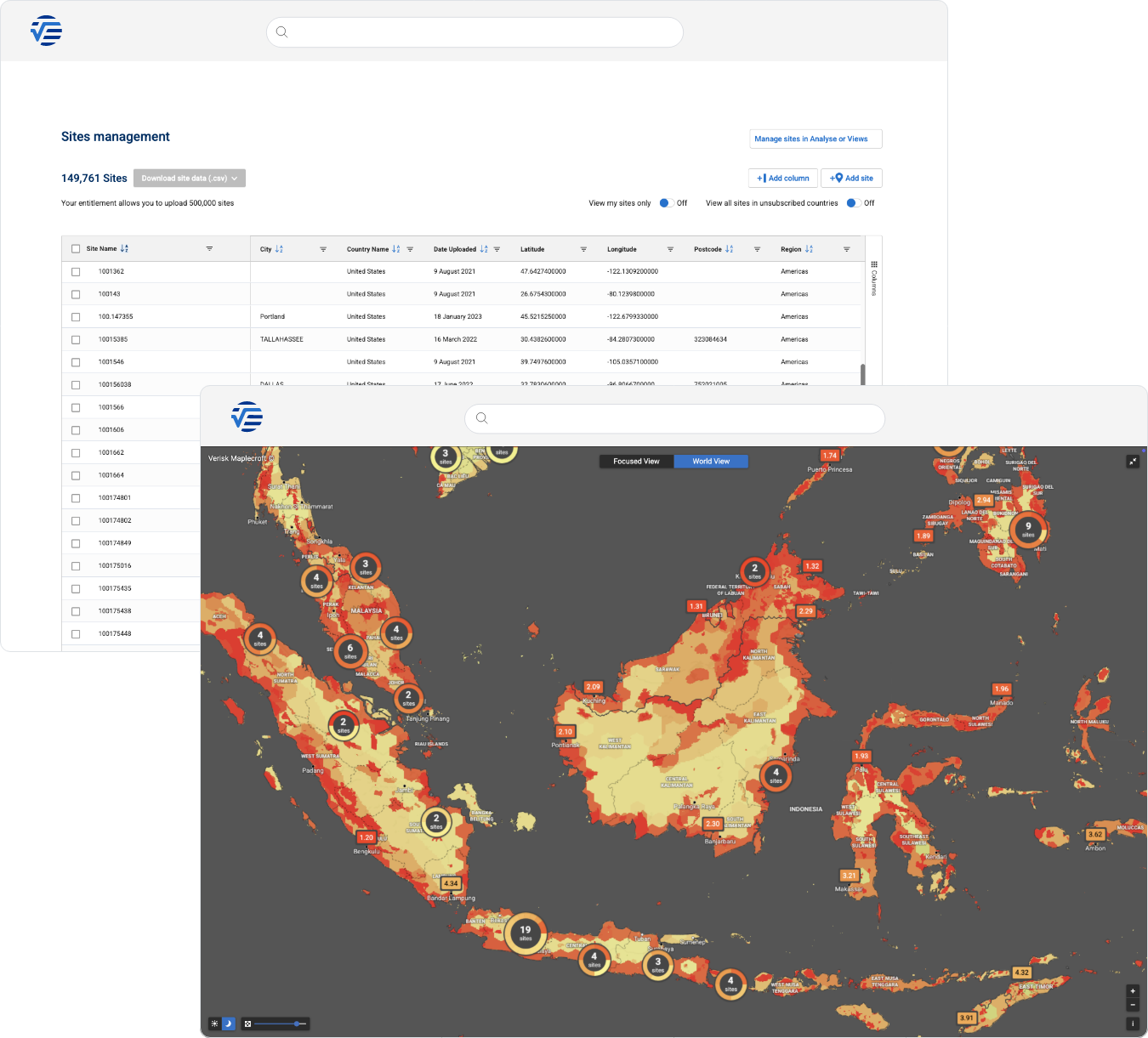
GRiD risk platform
Our online platform to explore maps, rankings, and time series for country and sub‑national risk.
API data delivery
Programmatic access to country risk, ESG country risk, and political risk data for enterprise systems.
Partner platform integrations
Access country risk data within partner platforms and existing workflows, helping teams incorporate external risk insight into day-to-day analysis.
Built for your team
Use cases across risk, sustainability and strategy teams
Supply chain risk management & due diligence
Hidden risks in your supply chain
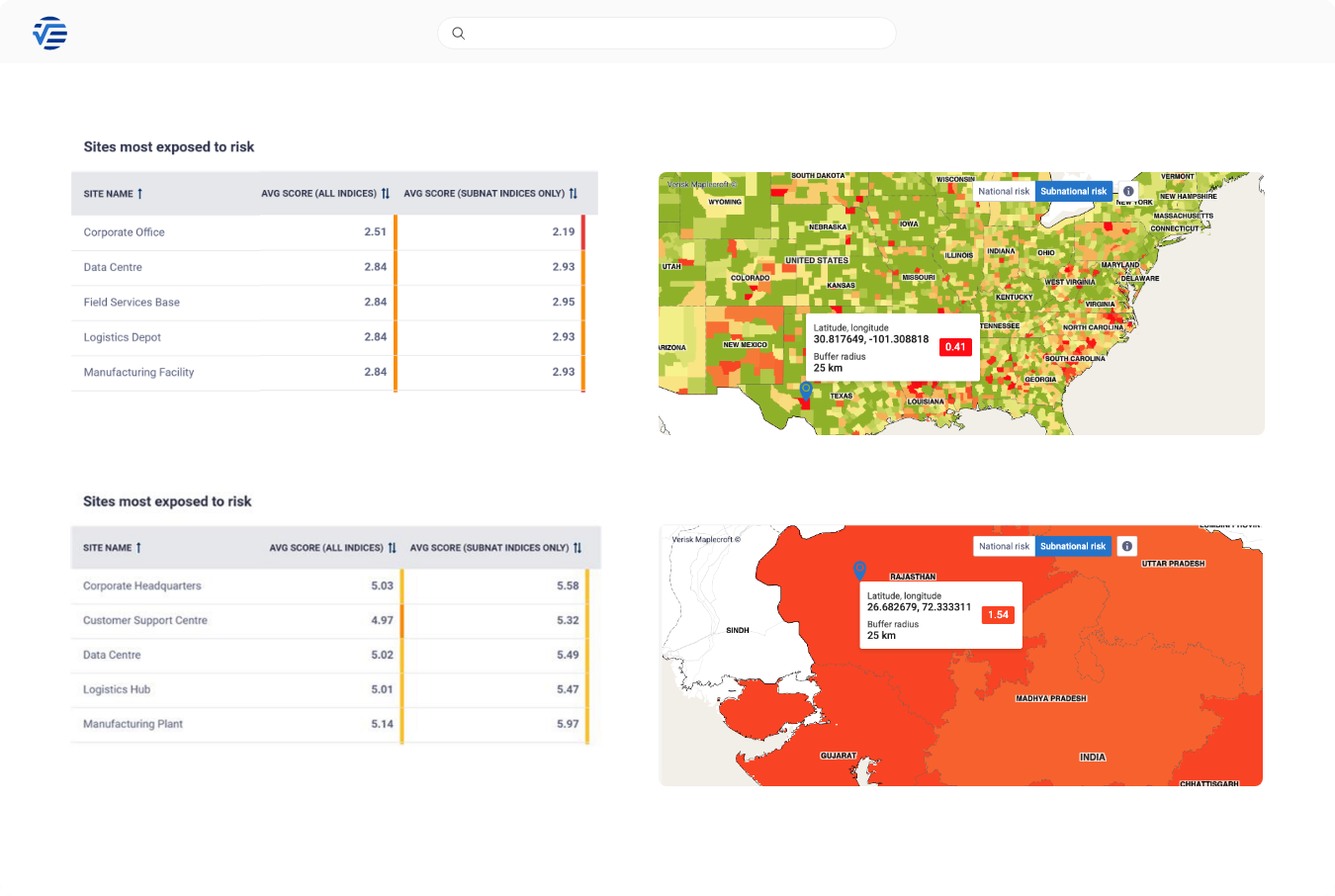
Challenge: Limited visibility of country and sub-national risks across Tier 1–N suppliers, including labour rights, environmental and political risks that can disrupt sourcing or create compliance exposure.
How it works: Screen suppliers and materials by location against country risk indices covering modern slavery, child labour, water stress, conflict and governance, helping teams prioritise audits, supplier engagement and remediation.
Outcome: Stronger supply chain risk management, improved compliance with human rights and environmental due diligence regulations, and more resilient sourcing strategies.
Market entry & expansion
Know the risks before entering a market
Challenge: Strategy and risk teams must evaluate political, environmental, social and economic risks before entering new markets or expanding operations, often with fragmented country intelligence.
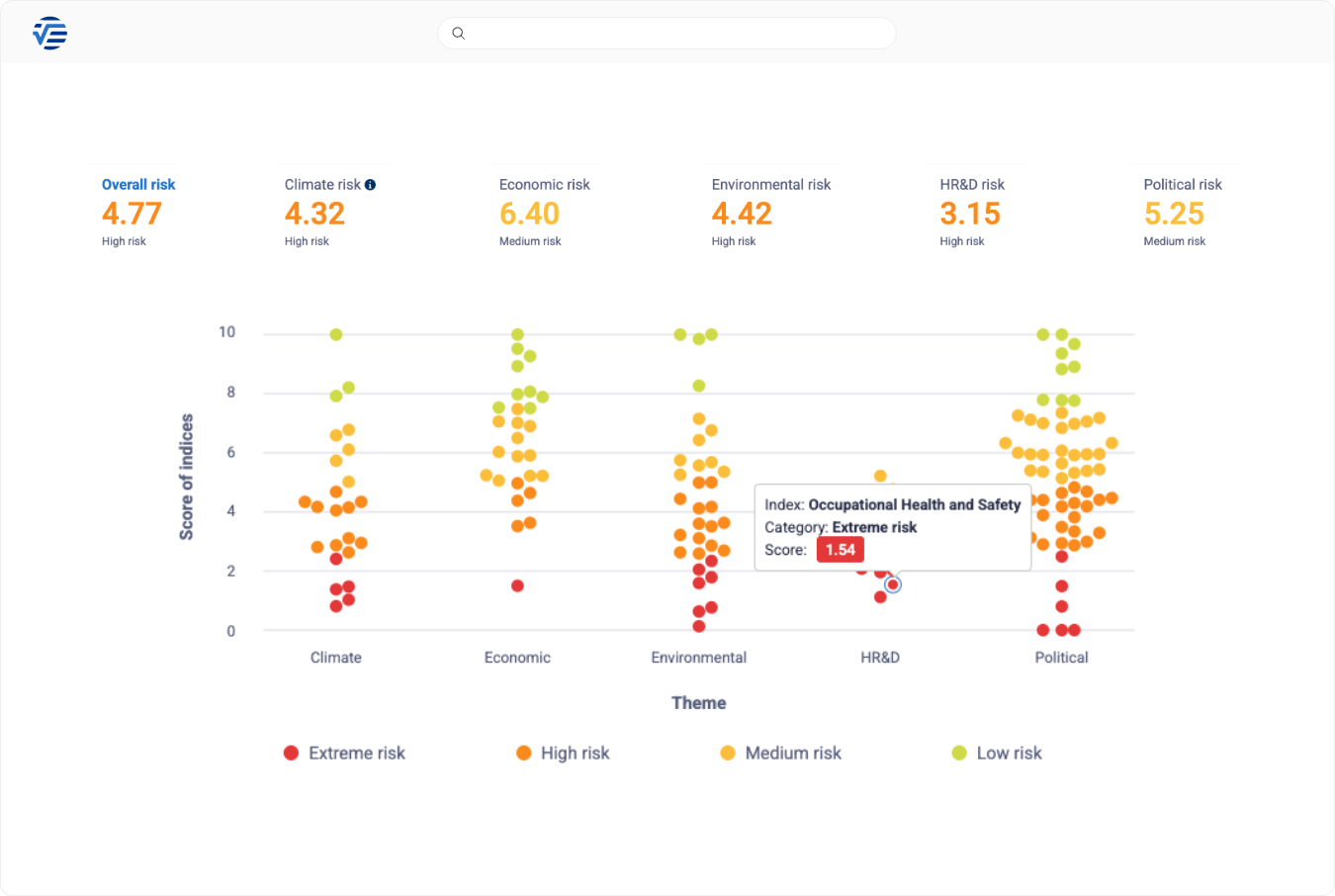
How it works: Compare country and sub-national risk scores across political stability, governance, climate exposure and social risk to identify suitable markets and assess potential operational challenges.
Outcome: Better-informed expansion decisions, fewer unforeseen disruptions and stronger long-term investment planning.
Sustainability & ESG risk analysis
Quantify country risk in disclosures
Challenge: Sustainability teams must quantify exposure to climate, environmental and social risks across operations and supply chains to support reporting and risk management.
How it works: Provide structured country risk indicators, benchmarks and comparable ESG risk metrics to support disclosures and integrate external risk into sustainability analysis.
Outcome: More credible sustainability reporting and clearer connections between ESG risks and business performance.
Operational resilience & security
Identify where operations face the greatest disruption risk
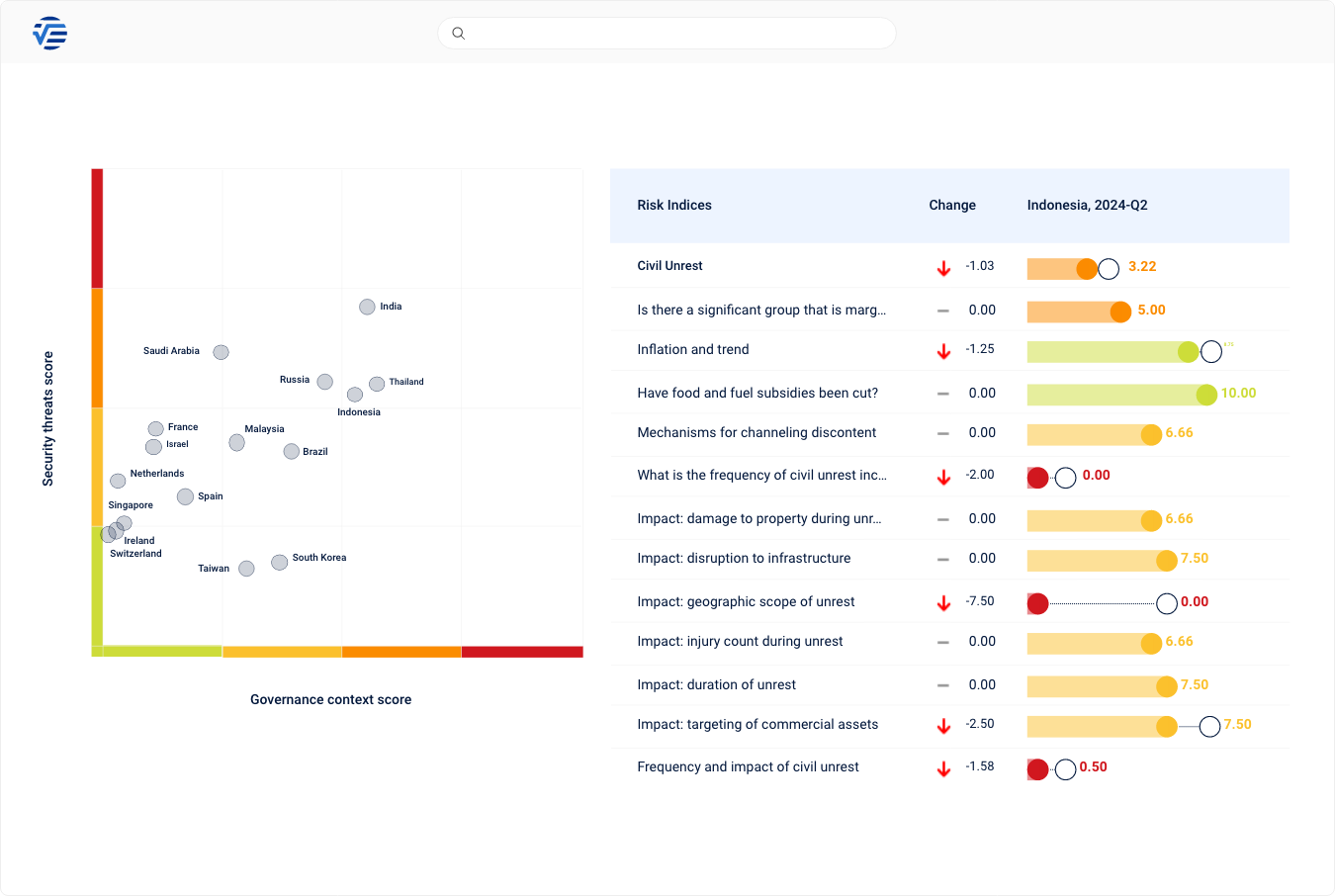
Challenge: Security and operational risk teams need to anticipate geopolitical instability, civil unrest and governance risks that could affect facilities, assets or personnel.
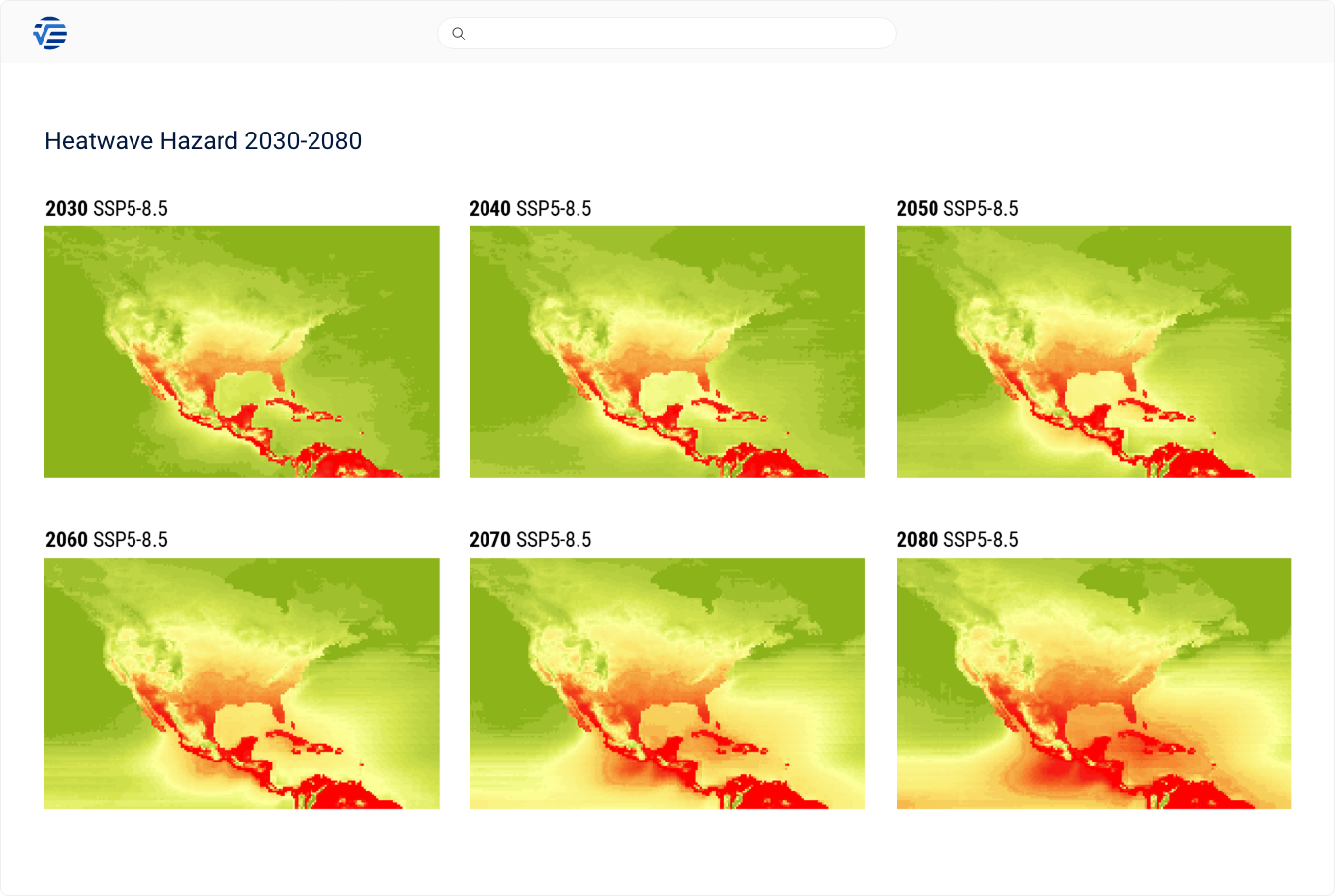
How it works: Map operational footprints against political violence, conflict and governance risk indices at country and sub-national level, helping teams monitor emerging hotspots.
Outcome: Improved operational resilience, stronger crisis preparedness and more informed site planning decisions.
Compliance & third-party risk management
Support risk-based due diligence
Challenge: Organisations must demonstrate robust, risk-based country due diligence to comply with evolving sanctions and supply chain regulations.
How it works: Embed country and sub-national risk ratings into procurement, KYC/KYS and third-party risk workflows, supporting consistent screening and audit trails.
Outcome: Stronger regulatory defence, faster due diligence processes and more consistent compliance decisions.
Investment & sovereign risk analysis
Price country risk into investment decisions
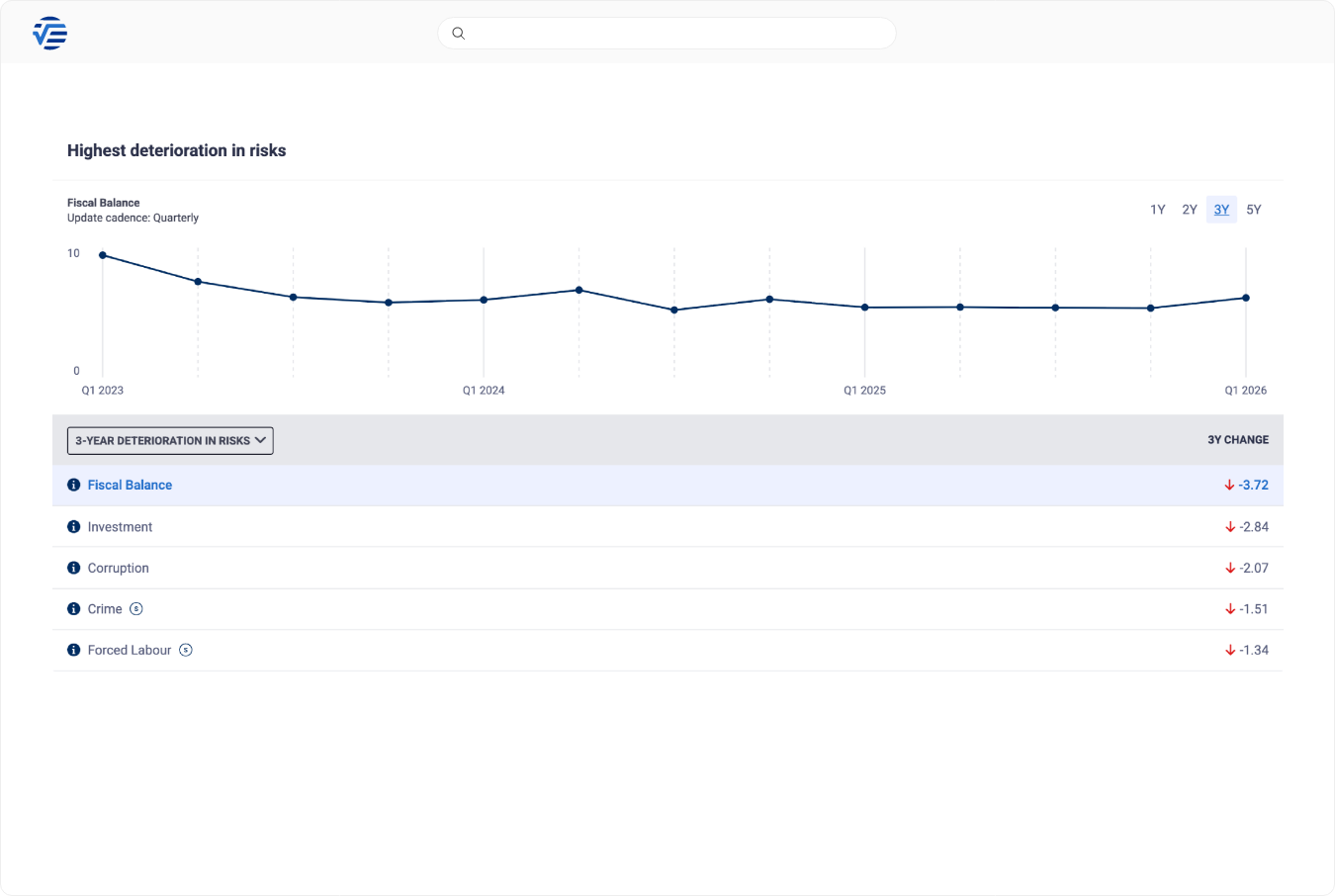
Challenge: Investors need to understand how environmental, social, political and economic risks at country level affect portfolio performance and long-term returns.
How it works: Deliver comparable country risk scores and time-series indices to support sovereign risk assessment, portfolio screening and scenario analysis.
Outcome: Better risk-adjusted investment decisions and stronger integration of country risk into portfolio strategy.
Share your current workflow and we’ll show you where country risk data can plug in.
Trusted by leaders to navigate and manage risk

















FAQs
-
What data can I access, and how do I choose the right package?
Access is flexible and tailored to your needs. You can choose from a wide range of indices across our climate, environment, human rights, economic and political risk datasets, selecting only the indicators and geographic coverage most relevant to you. Our modular approach means you subscribe to the data that supports your objectives, and our team can help you identify the right configuration for your use case.
-
How is country risk scored?
Country risk is scored using standardised indices that combine multiple indicators (for example, governance, conflict, climate, labour rights, and economic stability) into comparable risk scores for each country and, where available, sub‑national region. You can talk to an advisor to get a better understanding and to discuss your needs.
-
How do you compare to other data providers?
Verisk Maplecroft offers an integrated view of country risk across multiple themes, enabling users to assess interconnected risks in one place using transparent, regularly updated data designed for decision-making across a wide range of industries and use cases. You can talk to an advisor to get a better understanding and to discuss your needs.
-
How often is Country Risk Data updated?
Our indices are reviewed and updated annually at a minimum. Most indices are on an annual schedule – reflecting data availability and the underlying nature of the phenomena being assessed. A selection of our indices – predominantly in our political data – are updated on a quarterly cycle. You can talk to an advisor to get a better understanding and to discuss your needs.
-
Can Country Risk Data integrate into existing workflows and tools?
Yes, country risk data can be delivered through online platforms, APIs, and bulk files so it can plug into procurement, portfolio management, risk, reporting, and analytics tools across the organisation. You can talk to an advisor to get a better understanding and to discuss your needs.
Related
GRiD - Global Risk Dashboard
Our global risk intelligence platform, where geospatial data, mapping and expert insight converge to redefine the way you manage global risk.
Learn more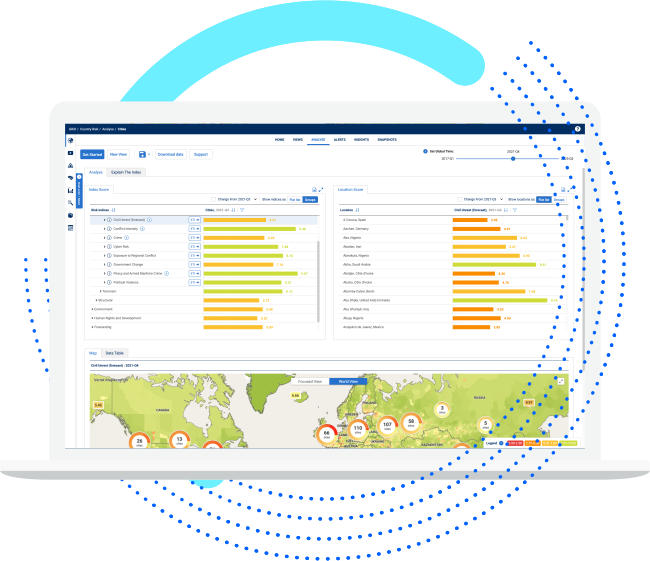
Explore risk categories further
Environmental Risk Data
Geospatial insights into nature-related risks to resilience and sustainability
Learn moreHuman Rights Data
Risk data for human rights due diligence, compliance, and impact assessment
Learn morePolitical Risk Data
Explore detailed geopolitical data to assess global stability, trends, and threats
Learn moreRequest
a demo
Share a few details and we’ll arrange a tailored demo with data and use cases relevant to your organisation.